Can You See Whales From Shore on Oahu?
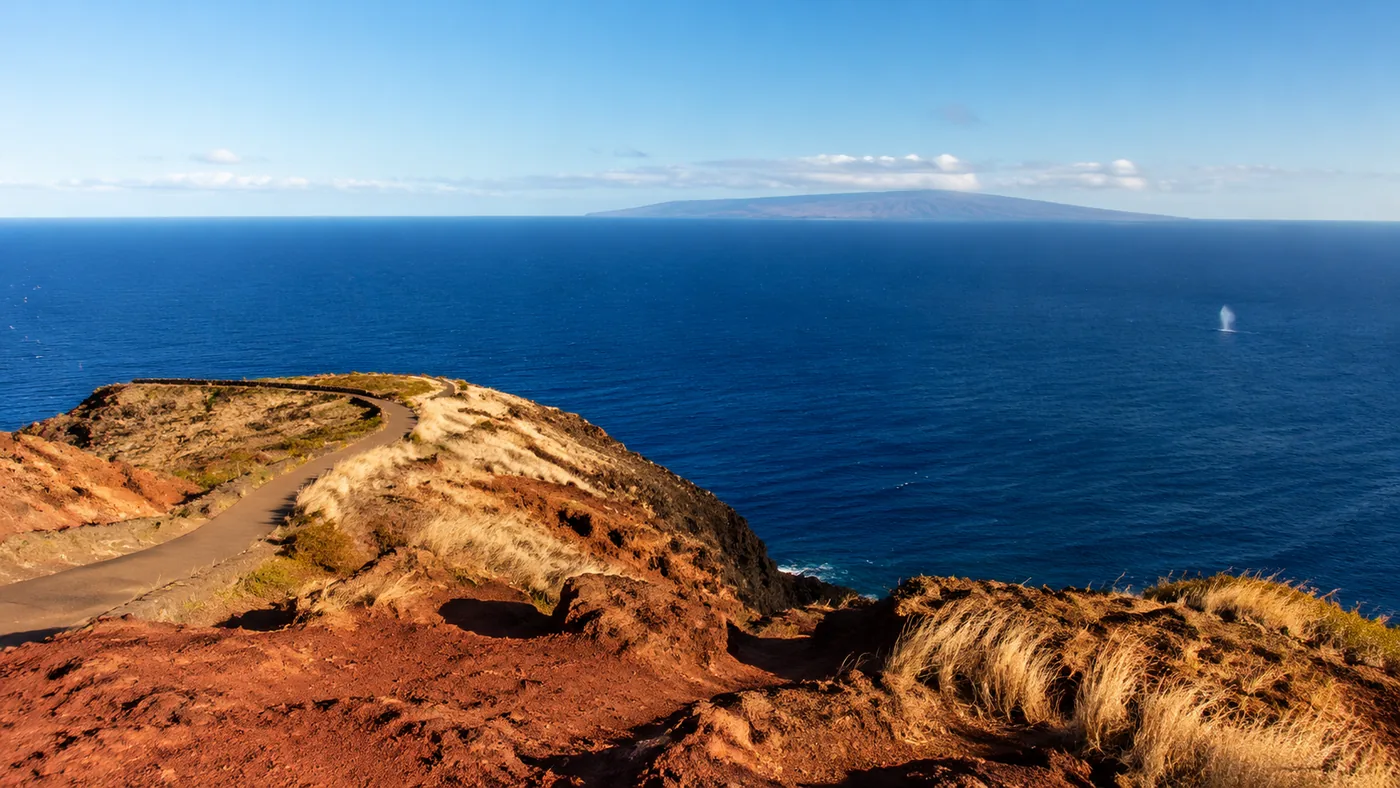
Makapuʻu Point Lighthouse Trail — the centrepiece
This is the free lookout that actually works. It sits inside Kaiwi State Scenic Shoreline on Oahuʻs windward side, looking down across the Kaiwi Channel toward Molokaʻi. The paved trail climbs to clifftop points roughly 2 miles round trip, gaining elevation steadily. No fee. No reservation. No ticket.
Why elevation matters: A whale's blow is hard to spot from beach level because the ocean surface hides it. From a few hundred feet up, a white puff stands out above the horizon line. That is the whole reason this trail works and why beachside watching does not.
Parking and gate hours: Free paved lot off Kalanianaʻole Highway, first-come first-served. Fills fastest mid-morning to early afternoon, worst on weekends and holidays in season. The gate opens 7:00 AM and closes 6:45 PM in winter, which covers the entire whale season (November through April). Go early; you get calmer water, better light and an empty lot.
Spotting scopes: There are spotting scopes at points along the trail, set up by volunteers and other birders. Free to use if available.
Other free lookouts worth trying
- Hālona Blowhole Lookout — no hike, roadside pull-off on Kalanianaʻole Highway past Hanauma Bay before Sandy Beach. Small free lot that fills early in season. Rough water, some glare, but a real option if you have no time for the trail.
- Lānaʻi Lookout — roadside cut into the sea cliff, minimal walking. Small lot with quick turnover. South-shore angle, good if winds are pushing the channel currents.
- Sandy Beach Park — easy access, both lot and free street parking. Easier than Makapuʻu but lower elevation means harder spotting. About 30 minutes from Waikīkī.
- Diamond Head / Kuilei Cliffs lookout — elevated south-shore view. This is a roadside lookout only, not the Diamond Head summit hike (that is separate and ticketed). Good light in afternoon.
- Kaʻena Point — northwestern tip, flat but long — 2+ miles each way — and fully exposed. Hiking in requires no permit; vehicle access into the reserve needs resident authorization only. Free and serious.
- Turtle Bay / North Shore — public beach access via the resortʻs public lot. Free marked stalls. Quieter than the southeast lookouts. Worth trying if the rest are packed.
How to actually do it — the technique
1. Go early. Calmer water, better light, empty parking lot. Plan to arrive within 30 minutes of gate opening.
2. Bring binoculars. This is the biggest difference between seeing whales and not seeing them. Rent them in Waikīkī if you do not have a pair. 7×50 or 8×42 is the standard. Do not skip this.
3. Wear polarised sunglasses. They cut the glare that hides a blow. Regular sunglasses will not work well.
4. Look for the white puff, not the whale. You are searching for a small burst of water vapour standing above the horizon line. The blow is what you actually spot; the animal comes after. Scanning the horizon with binoculars for 5 minutes and leaving is the classic beginner mistake. Give a spot at least 15 minutes before you move on.
5. Be patient. On a good day you will find them in an hour. On a slow day it takes longer. The payoff is free, so the pace is yours.
What shore watching cannot give you
Be clear about the limits, because they are real. From the lookouts you are getting blows and the occasional fluke or breach at distance, not detail. Whales are usually well offshore from Oahuʻs vantage points, so close-range behaviour — breaching, spyhopping, tail slapping, mother teaching a calf to surface — you will not see.
You also cannot hear them. Humpback song does not carry to shore. Many Oahu boat tours drop a hydrophone so passengers hear the singing directly — that is a real, specific thing the free option cannot give. The naturalist on a boat also tells you what behaviour you are watching; from shore you are guessing.
Boats radio each other's positions and actively move to whales. From a lookout you are waiting on chance.
The honest case for going out on a boat
Here is what a boat gets you: a hydrophone so you hear the song, a naturalist who explains what is happening, crew radioing positions so the captain knows where to head, and the chance to see behaviour and distance detail that shore cannot offer. The cheapest tour is $57, 1.5 hours, and it carries a free re-ride guarantee if you see nothing — so if you have days left in your trip, a voucher is worth booking into.
But here is the equal truth: a morning at a free lookout with binoculars is a real morning on the water's edge, and if you stay and you are patient, you will very likely see whales. Spend nothing and still feel well served. That is what makes the boat case honest.
See the six tours compared if you decide to book. Note that four of them say "Waikiki" in the title and leave from Kewalo Basin, about two miles west of Waikiki — so if you book at 7:00 AM you will be walking or paying for a short ride; the lots fill quickly.
Frequently asked questions
Can you really see whales from shore on Oahu?
Yes. The free lookouts work, especially Makapuʻu Point Lighthouse Trail. You will see blows and flukes at distance if you bring binoculars, go early and stay for at least 15 minutes in a spot. You will not get close detail, but you will see whales.
What is the best free lookout?
Makapuʻu Point Lighthouse Trail — 2 miles round trip, paved, free parking, gate open 7:00 AM to 6:45 PM (winter, covering the whole season). Elevation is what makes it work.
What do I need to bring?
Binoculars are essential. Without them, spotting a distant blow is very hard. Polarised sunglasses help cut glare. Water, sunscreen, hat and a layer are practical. Do not skip the binoculars.
What is the difference between shore and a boat tour?
From shore you see blows and occasional flukes at distance. On a boat you get a hydrophone so you hear singing, a naturalist who explains behaviour, crew radioing positions, and the chance to see breaching and close fluke detail. The tours start at $57.
Is November a good month to try shore watching?
November is the tail end of tourist season and the start of migration. Whales are arriving. It is playable but not peak. January through March is better.
What if I do not see any whales?
It happens. Come back another day. If you book a boat tour instead and see nothing, the standard remedy is a free re-ride voucher, not your money back — so book early in your trip if you want days left to redeem it.